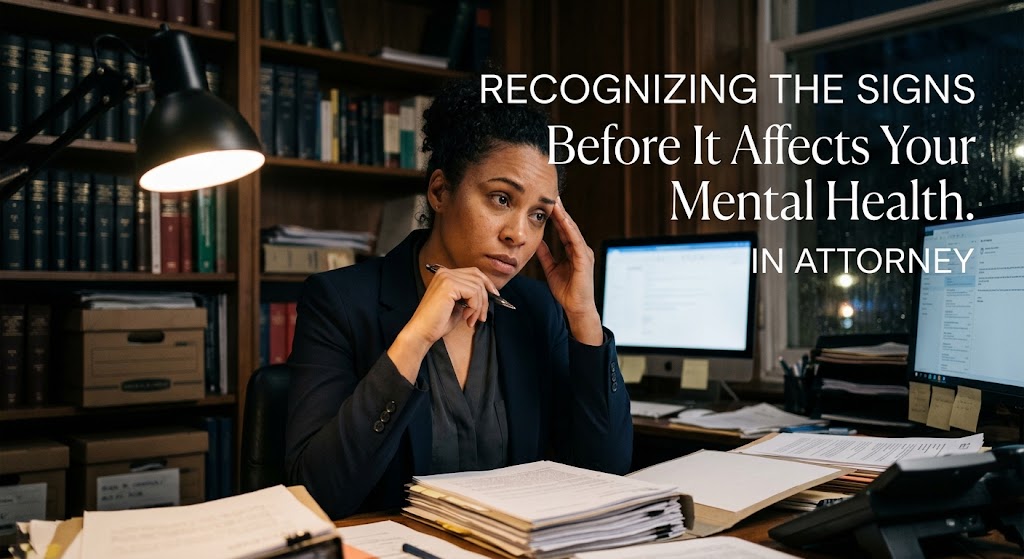
When High Performance Hides High Stress: Mental Health Risks Facing Attorneys Today

In the legal profession, high performance is often seen as the standard. Attorneys are expected to think quickly, perform under pressure, and manage demanding caseloads without hesitation. From the outside, many lawyers appear composed, successful, and in control. However, behind that performance, stress often builds quietly and persistently. When it is not addressed, it can develop into burnout, anxiety, depression, or substance-related challenges. Understanding these hidden mental health risks is essential for protecting long-term wellbeing in a profession built on constant pressure.

The Hidden Cost of High Performance in Law

High performance in legal work does not come without cost. Attorneys frequently work long hours, manage emotionally intense cases, and carry significant responsibility for client outcomes. While many adapt to these demands, adaptation does not eliminate stress. Instead, it often masks it.

Over time, the expectation to consistently perform at a high level can lead attorneys to ignore their own emotional and physical needs. Stress becomes part of the background rather than a signal that something needs attention.

Early Warning Signs of Hidden Stress

Mental health risks in attorneys often develop gradually. Because many continue functioning effectively, early symptoms are easy to overlook.

Emotional and Cognitive Signs

  • Persistent anxiety or feeling constantly on edge
  • Difficulty focusing or making decisions
  • Emotional exhaustion or detachment from work
  • Reduced motivation or sense of purpose

Physical and Behavioral Signs

  • Chronic fatigue that does not improve with rest
  • Sleep disturbances or difficulty unwinding
  • Headaches, muscle tension, or physical discomfort
  • Increased reliance on alcohol, medication, or stimulants

These symptoms often appear subtle at first but tend to intensify if stress continues without support.

Why Attorneys Are Especially Vulnerable to Stress

The legal profession creates a unique environment where pressure is constant and recovery time is limited. Attorneys are expected to remain highly analytical while also managing emotional and adversarial situations.

Several factors increase vulnerability:

  • Heavy caseloads and long working hours
  • High stakes decision-making
  • Emotional involvement in client outcomes
  • Competitive workplace culture
  • Limited time for rest and recovery

Even experienced attorneys are not immune to these pressures. In fact, long-term exposure can increase the risk of burnout.

The Link Between Stress, Burnout, and Substance Use

When stress becomes chronic, it can lead to burnout, which is a state of emotional and physical depletion. In some cases, attorneys may turn to alcohol or prescription medications to manage stress, sleep issues, or emotional strain.

While this may offer short-term relief, it can create a cycle that worsens mental health over time. Addressing stress early can reduce the risk of developing more serious substance-related concerns and support long-term recovery.

Mental Health and Recovery Options for Attorneys

There are effective, compassionate treatment options available for attorneys experiencing stress, burnout, or substance-related challenges. These programs are designed to support both professional responsibilities and personal healing.

Inpatient Treatment Programs

Inpatient care provides a structured environment where attorneys can step away from daily pressures and focus fully on recovery. These programs often include:

  • Medical supervision when necessary
  • Individual and group therapy sessions
  • Stress and burnout recovery support
  • Holistic therapies such as mindfulness and relaxation techniques

This level of care allows individuals to reset and rebuild emotional stability in a supportive setting.

Outpatient Treatment Programs

Outpatient care allows attorneys to maintain professional responsibilities while receiving ongoing support. Services may include:

  • Regular counseling or therapy sessions
  • Stress management and coping skills development
  • Relapse prevention strategies when needed
  • Flexible scheduling for working professionals

Holistic, Faith-Based, and Individualized Care

Many attorneys benefit from treatment that supports the whole person. Holistic and faith-based approaches may include:

  • Mindfulness and meditation practices
  • Physical wellness and nutrition support
  • Spiritual or faith-based counseling
  • Personalized treatment plans tailored to individual needs

Building Long-Term Mental Health Resilience

Sustainable wellbeing requires ongoing effort. Attorneys can strengthen resilience by:

  • Prioritizing consistent self-care routines
  • Setting boundaries between work and personal life
  • Engaging in regular therapy or counseling
  • Staying connected with supportive relationships and peers

Small, intentional changes can significantly improve long-term mental health.

Conclusion

High performance in the legal profession often hides high stress, but the impact of that stress is very real. Attorneys who continue to push through without support may face burnout or more serious mental health challenges over time. The good news is that recovery and support are available. With compassionate, individualized, and holistic treatment options, attorneys can restore balance, strengthen resilience, and protect their wellbeing. If stress is beginning to affect your life or work, reaching out for help is a meaningful and powerful first step toward lasting recovery and stability.

Strong on the Outside, Struggling Inside: Mental Health and Recovery Options for Attorneys Under Pressure

Attorneys are often seen as composed, capable, and resilient professionals who can handle intense pressure without breaking stride. In reality, many lawyers silently struggle with stress, anxiety, burnout, and substance-related challenges while continuing to perform at a high level. This disconnect between external strength and internal struggle is more common in the legal profession than many realize. When mental health concerns go unaddressed, they can gradually affect performance, relationships, and overall wellbeing. Understanding available mental health and recovery options is an important step toward lasting stability and health.

The Hidden Emotional Load of Legal Work

Legal practice demands constant mental focus, emotional control, and decision-making under pressure. Attorneys regularly deal with complex cases, high expectations, and outcomes that significantly impact clients’ lives. While this work can be rewarding, it also creates a continuous emotional load.

Over time, this pressure can accumulate. Many attorneys adapt by pushing through stress rather than addressing it, which can lead to emotional exhaustion that is not immediately visible on the surface.

Early Signs of Mental Health Strain in Attorneys

Mental health challenges in attorneys often develop gradually. Because many continue to function effectively at work, early signs are frequently overlooked.

Emotional and Cognitive Indicators

  • Persistent anxiety or feeling constantly overwhelmed
  • Difficulty concentrating or staying organized
  • Emotional detachment or reduced empathy
  • Irritability or increased frustration

Physical and Behavioral Indicators

  • Ongoing fatigue despite rest
  • Sleep disturbances or inability to unwind
  • Headaches or physical tension
  • Increased use of alcohol or medications to cope

These symptoms are important signals that stress may be affecting mental health more deeply than it appears.

Why Attorneys Often Struggle in Silence

The legal profession often rewards endurance, independence, and high performance. While these traits contribute to success, they can also discourage attorneys from seeking help. Many fear that acknowledging stress or mental health challenges may be seen as weakness or professional risk.

As a result, attorneys may continue to operate under increasing pressure without adequate support. This can intensify emotional strain and increase the risk of burnout or substance use.

The Connection Between Stress, Burnout, and Substance Use

Chronic stress can lead to burnout, which is a state of emotional and physical exhaustion. Some attorneys may turn to alcohol or prescription medication as a way to manage stress, sleep issues, or emotional discomfort. While this may provide short-term relief, it can create additional challenges over time.

Recognizing this connection early is key to preventing more serious mental health or substance-related concerns. Support and treatment can interrupt this cycle and promote long-term recovery.

Mental Health and Recovery Options for Attorneys

There are effective, compassionate treatment options available that are designed to support attorneys facing stress, burnout, or substance-related concerns. These programs offer structure, flexibility, and individualized care.

Inpatient Treatment Programs

Inpatient care provides a structured environment where attorneys can step away from daily pressures and focus on recovery. These programs often include:

  • Medical supervision when needed
  • Individual and group therapy sessions
  • Stress and burnout recovery support
  • Holistic therapies such as mindfulness and relaxation techniques

This level of care allows individuals to fully focus on healing without external demands.

Outpatient Treatment Programs

Outpatient care allows attorneys to continue working while receiving ongoing support. Services typically include:

  • Regular counseling or therapy sessions
  • Stress management and coping skills training
  • Relapse prevention strategies
  • Flexible scheduling for professionals

Holistic, Faith-Based, and Individualized Care

Many attorneys benefit from treatment that addresses the whole person rather than just symptoms. Holistic approaches may include:

  • Mindfulness and meditation practices
  • Physical wellness and nutrition support
  • Faith-based counseling and spiritual guidance
  • Personalized treatment plans tailored to individual needs

Building Long-Term Mental Health Resilience

Recovery and mental wellness are ongoing processes. Attorneys can strengthen long-term resilience by:

  • Prioritizing consistent self-care routines
  • Maintaining clear boundaries between work and personal life
  • Engaging in regular therapy or counseling
  • Staying connected to supportive relationships and communities

Small, consistent actions can have a meaningful and lasting impact on overall wellbeing.

Conclusion

Many attorneys appear strong and successful on the outside while quietly struggling with significant internal pressure. Recognizing mental health challenges early and seeking support can prevent burnout and promote long-term recovery. With access to compassionate, individualized, and holistic treatment options, attorneys do not have to navigate these challenges alone. If stress, burnout, or substance-related concerns are affecting your life, reaching out for help is a powerful step toward healing, balance, and lasting wellbeing.

Beyond the Courtroom: How Attorneys Can Manage Stress Before It Leads to Burnout

Attorneys operate in one of the most demanding professional environments. Between courtroom pressure, client expectations, long hours, and emotionally charged cases, stress is often part of daily life. While many lawyers are trained to perform under pressure, few are trained to manage the long-term emotional toll that comes with it. When stress is not addressed early, it can quietly build into burnout, anxiety, depression, or substance-related challenges. Learning how to manage stress before it escalates is essential for maintaining both professional performance and personal wellbeing.

Understanding Stress in the Legal Profession

Stress in legal practice is not occasional. It is ongoing, layered, and often unpredictable. Attorneys may move from one high-stakes matter to another without sufficient time to recover mentally or emotionally.

Over time, this constant activation of stress can affect mood, decision-making, sleep, and overall health. Even highly successful attorneys may not realize how much strain they are under until it begins affecting their quality of life.

Early Warning Signs of Chronic Stress

Recognizing stress early is one of the most effective ways to prevent burnout. Many attorneys continue functioning at a high level while experiencing internal exhaustion.

Emotional and Cognitive Signs

  • Difficulty concentrating or staying organized
  • Increased irritability or frustration
  • Feeling emotionally drained or disconnected
  • Loss of motivation or professional satisfaction

Physical and Behavioral Signs

  • Chronic fatigue or low energy
  • Sleep problems or difficulty unwinding after work
  • Headaches, muscle tension, or physical discomfort
  • Increased reliance on alcohol or prescription medication

These signs often develop gradually, which is why they are frequently overlooked or minimized.

Why Attorneys Are Especially Vulnerable to Burnout

The legal profession creates a unique combination of pressure, responsibility, and emotional intensity. Attorneys are expected to remain composed and effective even in difficult or adversarial situations.

Several factors increase burnout risk, including:

  • Heavy workloads and long working hours
  • High expectations for precision and performance
  • Emotional involvement in client outcomes
  • Limited time for recovery or rest
  • A culture that often discourages vulnerability

When these pressures continue without relief, burnout becomes more likely.

Practical Strategies to Manage Stress Early

Managing stress does not always require major life changes. Small, consistent habits can significantly reduce the risk of burnout over time.

Daily Habits That Support Mental Health

  • Prioritizing consistent sleep routines
  • Taking short breaks throughout the workday
  • Maintaining regular physical activity
  • Eating balanced meals and staying hydrated

Emotional Regulation and Mental Wellness

  • Practicing mindfulness or breathing exercises
  • Setting realistic expectations and boundaries
  • Journaling to process thoughts and stress
  • Limiting exposure to work outside of designated hours when possible

Building Support Systems

  • Staying connected with trusted colleagues or mentors
  • Engaging in peer support networks
  • Maintaining relationships outside of work
  • Seeking professional counseling when needed

These strategies help attorneys maintain balance before stress becomes overwhelming.

When Professional Support Becomes Necessary

There are times when stress cannot be managed alone. When symptoms persist or begin affecting daily functioning, professional support can provide structure and relief. Treatment is not only for crisis situations. It can also be a proactive step toward prevention and long-term wellbeing.

Inpatient Treatment Options

Inpatient programs offer a structured environment for attorneys who need focused care. These programs typically include:

  • Medical supervision when needed
  • Individual and group therapy sessions
  • Stress and burnout recovery support
  • Holistic therapies such as mindfulness and relaxation techniques

Outpatient Treatment Options

Outpatient care allows attorneys to maintain professional responsibilities while receiving consistent support. Services often include:

  • Regular therapy sessions
  • Stress management and coping skills training
  • Relapse prevention education when substance use is present
  • Flexible scheduling for working professionals

Holistic and Individualized Care

Many attorneys benefit from treatment that supports the whole person. Holistic approaches may include:

  • Mindfulness and meditation practices
  • Physical wellness and nutrition support
  • Faith-based counseling and spiritual care
  • Personalized treatment plans based on individual needs

Building Long-Term Resilience Beyond the Courtroom

Sustainable wellbeing requires ongoing attention. Attorneys can strengthen long-term resilience by:

  • Maintaining consistent self-care routines
  • Setting and protecting work-life boundaries
  • Engaging in regular mental health support
  • Prioritizing rest and recovery as part of professional success

Resilience is not about avoiding stress entirely. It is about responding to it in healthier and more sustainable ways.

Conclusion

Stress is an unavoidable part of legal practice, but burnout does not have to be. By recognizing early warning signs and adopting healthy coping strategies, attorneys can protect their mental health before stress escalates. With access to compassionate, individualized, and holistic care, recovery and balance are possible. If stress is beginning to impact your wellbeing, reaching out for support is a strong and important step toward long-term stability, resilience, and personal wellness beyond the courtroom.

High Achieving, High Stress: Recognizing Mental Health Risks in the Legal Profession Early

The legal profession is often defined by achievement, precision, and high performance under pressure. Attorneys are expected to manage demanding caseloads, meet strict deadlines, and deliver strong results in emotionally and intellectually intense environments. While many lawyers excel in these conditions, the same traits that drive success can also mask growing mental health challenges. High achieving attorneys are not immune to stress, anxiety, burnout, or substance-related risks. Recognizing these challenges early is essential for protecting long-term wellbeing and sustaining a healthy legal career.

The Hidden Stress Behind High Performance

In law, success often comes with constant pressure. Attorneys may feel the need to always be available, always prepared, and always performing at a high level. Over time, this expectation can create a cycle of chronic stress that becomes normalized.

Because many attorneys continue to perform well professionally, the internal impact of stress is often overlooked. This disconnect between external success and internal strain is one of the most common reasons mental health concerns go unaddressed in the legal field.

Early Mental Health Warning Signs in Attorneys

Mental health challenges rarely appear suddenly. Instead, they develop gradually, often showing subtle signs that are easy to dismiss.

Emotional and Cognitive Changes

  • Persistent anxiety or feeling constantly “on alert”
  • Difficulty focusing or staying organized
  • Irritability or emotional exhaustion
  • Loss of interest or motivation in work

Physical and Behavioral Changes

  • Ongoing fatigue, even after rest
  • Sleep difficulties or restless nights
  • Headaches, tension, or physical discomfort
  • Increased reliance on alcohol or prescription medications

These symptoms are often mistaken for normal job stress. However, when they persist, they may indicate deeper mental health concerns that require attention.

Why High Achieving Attorneys Are at Greater Risk

High achieving attorneys often face unique pressures that increase vulnerability to mental health challenges. Many take on heavy workloads, set extremely high personal standards, and struggle to disconnect from work responsibilities.

Common risk factors include:

  • Perfectionism and fear of failure
  • Long working hours with limited recovery time
  • Emotional involvement in client outcomes
  • Competitive workplace environments
  • Difficulty asking for help or showing vulnerability

Over time, these factors can contribute to burnout, anxiety disorders, depression, or substance use as a coping mechanism.

The Link Between Stress, Burnout, and Substance Use

When stress becomes chronic, some attorneys may turn to alcohol or medications to manage emotional strain, improve sleep, or reduce anxiety. While this may provide temporary relief, it can quickly lead to dependency and worsen mental health over time.

Burnout and substance use often develop together. This makes early intervention especially important. Addressing stress before it escalates can significantly reduce long-term risks.

Mental Health and Recovery Support Options for Attorneys

Attorneys facing stress-related mental health challenges have access to structured, compassionate treatment options designed to support both recovery and professional life.

Inpatient Treatment Programs

Inpatient care provides a safe and structured environment for attorneys who need focused support. These programs often include:

  • Medical supervision when necessary
  • Individual and group therapy sessions
  • Stress and burnout recovery support
  • Holistic therapies such as mindfulness and relaxation techniques

This level of care allows individuals to step away from daily pressure and focus fully on healing.

Outpatient Treatment Programs

Outpatient care allows attorneys to continue working while receiving ongoing support. Services may include:

  • Regular therapy sessions
  • Stress management and coping skills development
  • Relapse prevention strategies
  • Flexible scheduling for working professionals

Holistic, Faith Based, and Individualized Care

Many attorneys benefit from treatment that addresses the whole person, not just symptoms. These approaches may include:

  • Mindfulness and meditation practices
  • Physical wellness and nutrition support
  • Faith-based counseling and spiritual guidance
  • Personalized treatment plans tailored to individual needs

Building Long-Term Mental Health Resilience

Mental health is not something that is fixed in one step. It requires ongoing attention and care. Attorneys can strengthen resilience by:

  • Maintaining consistent self-care routines
  • Setting clear boundaries between work and personal life
  • Engaging in regular therapy or counseling
  • Staying connected with supportive peers and relationships

Small, consistent actions can have a lasting impact on overall wellbeing.

Conclusion

High achieving attorneys often appear strong and composed, but even the most successful professionals are vulnerable to stress and mental health challenges. Recognizing early warning signs is one of the most important steps in preventing burnout and protecting long-term wellbeing. With access to compassionate, individualized, and holistic care, attorneys can find balance, recovery, and renewed clarity. If stress is beginning to affect your mental health or daily life, reaching out for support is a meaningful step toward stability, resilience, and lasting wellness.

The Pressure Behind the Performance: How Legal Stress Impacts Even Top Attorneys

In the legal profession, performance is everything. Attorneys are expected to think clearly under pressure, manage demanding caseloads, and deliver strong results in high-stakes environments. From the outside, many top lawyers appear confident, composed, and highly capable. However, behind that performance is often a different reality. Chronic stress can build quietly over time, affecting mental health, physical wellbeing, and overall quality of life. Even the most successful attorneys are not protected from the impact of sustained pressure.

The Reality of Stress in High-Performance Legal Work

Legal work is inherently demanding. Attorneys regularly navigate tight deadlines, complex legal arguments, and emotionally charged situations. While many become skilled at functioning under pressure, that does not eliminate the physiological and emotional toll of stress.

Over time, the expectation to maintain high performance can make it harder for attorneys to recognize their own limits. Stress becomes normalized, and warning signs are often ignored in order to keep up with professional demands.

Early Signs That Stress Is Affecting Performance

Even top-performing attorneys may begin to experience subtle changes that indicate stress is taking a toll.

Emotional and Cognitive Changes

  • Difficulty concentrating or staying organized
  • Increased irritability or frustration
  • Feeling mentally exhausted or overwhelmed
  • Reduced satisfaction or motivation in work

Physical and Behavioral Changes

  • Chronic fatigue that does not improve with rest
  • Sleep disruption or difficulty winding down
  • Headaches, muscle tension, or physical discomfort
  • Increased reliance on alcohol or prescription medication

These signs often develop gradually. Because attorneys are trained to push through pressure, they may not recognize how significantly stress is affecting them until it becomes more disruptive.

Why High Achievers Are Still Vulnerable

There is a common misconception that success protects against stress. In reality, high achievement can sometimes increase vulnerability. Attorneys who consistently perform at a high level may feel pressure to maintain that standard at all times.

This can lead to:

  • Difficulty setting boundaries around work
  • Reluctance to ask for help
  • Internalizing stress rather than addressing it
  • Overworking as a coping mechanism

Without support, this cycle can contribute to burnout and emotional exhaustion, even in highly successful professionals.

The Connection Between Legal Stress and Mental Health

Chronic stress does not stay contained. Over time, it can contribute to anxiety, depression, burnout, and substance use. Some attorneys may begin using alcohol or medication to manage stress, sleep, or emotional strain. While this may seem manageable at first, it can quickly become a larger concern if left unaddressed.

Mental health support is essential not only for recovery, but also for prevention. Early intervention helps attorneys maintain clarity, stability, and long-term wellbeing.

Treatment and Support Options for Attorneys

Professional support can provide structure, relief, and tools for managing stress in healthier ways. Treatment options are designed to meet the needs of working professionals while offering compassionate care.

Inpatient Treatment Programs

Inpatient care provides a structured environment for attorneys who need focused support. These programs typically include:

  • Medical supervision when needed
  • Individual and group therapy sessions
  • Stress and burnout recovery support
  • Holistic practices such as mindfulness and relaxation techniques

This level of care allows individuals to step away from daily pressure and focus fully on recovery.

Outpatient Treatment Programs

Outpatient programs allow attorneys to continue working while receiving ongoing support. Services often include:

  • Regular counseling or therapy sessions
  • Stress management and coping skills training
  • Relapse prevention support when substance use is involved
  • Flexible scheduling for professionals

Holistic, Faith Based, and Individualized Care

Many attorneys benefit from a whole-person approach that supports mental, physical, and spiritual wellbeing. These programs may include:

  • Mindfulness and meditation practices
  • Nutrition and physical wellness support
  • Faith-based counseling and spiritual care
  • Personalized treatment plans based on individual needs

Building Long-Term Resilience in Legal Practice

Managing stress is not a one-time effort. It requires ongoing attention and intentional habits. Attorneys can strengthen resilience by:

  • Prioritizing regular rest and recovery
  • Setting clear boundaries between work and personal time
  • Maintaining supportive relationships and peer connections
  • Engaging in ongoing mental health care when needed

Small, consistent changes can significantly improve long-term wellbeing.

Conclusion

The pressure behind legal performance is real, even for the most successful attorneys. Stress does not always show on the surface, but it can have a profound impact over time. Recognizing the signs early and seeking support can prevent burnout and protect both mental health and career longevity. With access to compassionate, individualized, and holistic care, attorneys can move from silent struggle to sustainable balance. If legal stress is affecting your wellbeing, reaching out for help is a strong and important step toward recovery, resilience, and long-term stability.

When Success Hides Stress: Why High Functioning Attorneys Still Need Mental Health Support

Success in the legal profession often comes with recognition, responsibility, and high expectations. Attorneys are trained to perform under pressure, manage complex cases, and deliver results in demanding environments. From the outside, many appear confident, composed, and highly capable. However, success can sometimes conceal significant internal stress. Even high functioning attorneys are not immune to anxiety, burnout, or emotional exhaustion. Without proper mental health support, this hidden stress can quietly escalate and impact both personal wellbeing and professional performance.

The Hidden Reality Behind High Performance in Law

In the legal field, high performance is often equated with resilience. Attorneys may push through long hours, difficult cases, and emotional strain without showing outward signs of struggle. While this can be a strength, it can also lead to the normalization of chronic stress.

Over time, the pressure to maintain success can prevent attorneys from acknowledging their own mental health needs. This creates a situation where stress builds silently, often until it becomes difficult to ignore.

Early Signs of Hidden Stress in Attorneys

Recognizing early warning signs is essential for preventing long term mental health challenges. High functioning attorneys may still meet deadlines and perform well while experiencing internal strain.

Emotional and Cognitive Signs

  • Feeling constantly “on edge” or overwhelmed
  • Difficulty focusing or maintaining mental clarity
  • Increased irritability or emotional detachment
  • Loss of satisfaction or motivation in work

Physical and Behavioral Signs

  • Persistent fatigue, even after rest
  • Sleep disturbances or difficulty unwinding
  • Headaches, tension, or physical discomfort
  • Increased reliance on alcohol, medication, or stimulants

These symptoms may be subtle at first. However, they often become more noticeable when stress is left unaddressed.

Why Attorneys Are Especially Vulnerable to Stress

The legal profession carries unique pressures that can contribute to long term stress. Attorneys are expected to manage heavy caseloads, meet strict deadlines, and make high stakes decisions that affect real lives.

In addition, the culture of law often values endurance and self reliance. This can make it difficult for attorneys to seek help or admit when they are struggling. As a result, many continue functioning at a high level while silently experiencing emotional strain.

The Importance of Mental Health Support for Attorneys

Mental health support is not only for times of crisis. It is a proactive tool that helps attorneys maintain balance, clarity, and long term wellbeing. Early intervention can prevent burnout and reduce the risk of more serious mental health or substance related challenges.

Support can help attorneys:

  • Improve emotional regulation and stress management
  • Strengthen focus and decision making
  • Restore energy and motivation
  • Build healthier coping strategies

Treatment and Recovery Options for Attorneys

When stress begins to impact daily life, professional support can provide structure and relief. Treatment options are designed to meet attorneys where they are, offering both flexibility and comprehensive care.

Inpatient Treatment Programs

Inpatient care provides a structured environment for intensive support and recovery. These programs typically include:

  • Medical supervision when needed
  • Individual and group therapy sessions
  • Stress and burnout recovery support
  • Holistic therapies such as mindfulness and relaxation techniques

This level of care allows attorneys to step away from daily pressures and focus fully on healing.

Outpatient Treatment Programs

Outpatient care allows attorneys to continue working while receiving ongoing mental health support. Services often include:

  • Regular therapy sessions
  • Stress management and coping skills training
  • Relapse prevention support when needed
  • Flexible scheduling for working professionals

Holistic, Faith Based, and Individualized Care

Many attorneys benefit from a whole person approach that supports mind, body, and spirit. These programs may include:

  • Mindfulness and meditation practices
  • Physical wellness and nutrition support
  • Faith based counseling and spiritual care
  • Personalized treatment plans based on individual needs

Building Long Term Mental Wellness

Sustainable mental health requires ongoing attention and care. Attorneys can strengthen their wellbeing by:

  • Maintaining consistent therapy or counseling
  • Setting boundaries between work and personal life
  • Prioritizing rest, sleep, and recovery
  • Staying connected to supportive relationships and communities

Small, consistent actions can make a significant difference over time.

Conclusion

High functioning attorneys often appear to have everything under control, yet success can sometimes hide significant stress. Recognizing early signs of emotional strain and seeking mental health support is a powerful step toward long term stability and wellbeing. With access to compassionate, individualized, and holistic care, attorneys can move from silent struggle to sustainable balance. If stress is beginning to affect your life, reaching out for support is not a weakness. It is a meaningful step toward recovery, resilience, and lasting professional and personal health.

Mental Health Matters: Recovery and Support Options for Stressed Attorneys

The legal profession demands precision, endurance, and constant performance under pressure. Attorneys are expected to manage complex cases, advocate for clients, and make high-stakes decisions, often within tight deadlines and emotionally charged environments. While many lawyers appear confident and in control, stress can accumulate quietly over time. Without proper support, this stress can develop into anxiety, burnout, depression, or substance-related challenges. Prioritizing mental health is not optional in this profession. It is essential for long-term success, stability, and wellbeing.

Why Mental Health Is a Critical Issue for Attorneys

Mental health challenges in the legal field are more common than many realize. The combination of long hours, adversarial environments, and constant responsibility creates ongoing pressure. Attorneys often feel they must remain composed and high functioning, even when struggling internally.

This disconnect between outward performance and internal stress can delay recognition of mental health concerns. Over time, untreated stress can impact decision making, relationships, and overall quality of life.

Early Signs of Mental Health Strain in Attorneys

Recognizing early warning signs is one of the most effective ways to prevent more serious challenges.

Emotional and Cognitive Signs

  • Persistent anxiety or worry
  • Difficulty concentrating or staying organized
  • Emotional exhaustion or detachment
  • Loss of motivation or enjoyment in work

Physical and Behavioral Signs

  • Chronic fatigue or low energy
  • Sleep disturbances or insomnia
  • Headaches or physical tension
  • Increased reliance on alcohol or medications to cope

These signs often develop gradually. Because attorneys are trained to push through pressure, they may overlook or minimize them until they begin affecting daily functioning.

The Link Between Stress, Burnout, and Substance Use

When stress becomes overwhelming, some attorneys turn to alcohol or other substances as a coping mechanism. While this may provide temporary relief, it can worsen mental health over time and increase the risk of dependency.

Burnout and substance use often go hand in hand. Addressing stress early can reduce the likelihood of developing more serious challenges and support long-term recovery.

Recovery and Support Options for Attorneys

Attorneys have access to a wide range of treatment options designed to support mental health and address substance-related concerns in a confidential and professional setting.

Inpatient Treatment Programs

Inpatient care provides a structured environment where attorneys can step away from daily pressures and focus on recovery. These programs typically include:

  • Medical supervision when needed
  • Individual and group therapy sessions
  • Stress management and emotional regulation support
  • Holistic therapies such as mindfulness and relaxation techniques

Outpatient Treatment Programs

Outpatient care allows attorneys to maintain their professional responsibilities while receiving ongoing support. Services often include:

  • Regular counseling or therapy sessions
  • Coping skills and stress management training
  • Relapse prevention education
  • Flexible scheduling for working professionals

Holistic and Faith-Based Approaches

Many attorneys benefit from treatment that addresses the whole person, not just symptoms. Holistic and faith-based care may include:

  • Mindfulness and meditation practices
  • Nutrition and physical wellness guidance
  • Spiritual or faith-based counseling
  • Individualized treatment plans based on personal needs and values

These approaches support emotional healing while also strengthening physical and spiritual wellbeing.

Building Long-Term Mental Health Resilience

Recovery and mental health maintenance are ongoing processes. Attorneys can build long-term resilience by:

  • Prioritizing regular therapy or counseling
  • Maintaining consistent sleep and self-care routines
  • Setting boundaries between work and personal life
  • Engaging in physical activity and stress-reducing practices
  • Staying connected with supportive peers and communities

Small, consistent actions can have a lasting impact on mental wellbeing.

Conclusion

Mental health matters for every attorney, regardless of experience level or success. The pressures of legal work can quietly affect wellbeing, but support and recovery are available. By recognizing early signs of stress and accessing compassionate, individualized care, attorneys can restore balance and protect both their personal health and professional performance. Holistic, faith-based, inpatient, and outpatient treatment options provide meaningful pathways toward healing. If stress or mental health challenges are affecting your life, reaching out for help is a strong and important step toward recovery, stability, and long-term wellbeing.

Burnout in the Legal Profession: What Every Attorney Needs to Know

Burnout in the legal profession is more common than many attorneys realize. Behind the polished courtroom presence and high-performing reputation, many lawyers are quietly struggling with exhaustion, emotional fatigue, and chronic stress. The demands of legal work do not simply create pressure, they sustain it over long periods of time. When that pressure is not properly managed, it can lead to burnout that affects mental health, physical wellbeing, and professional performance. Understanding what burnout looks like, why it happens, and how to address it is essential for every attorney who wants to build a sustainable career.

What Burnout Really Means for Attorneys

Burnout is not just feeling tired after a long week. It is a deeper state of emotional, mental, and physical exhaustion caused by prolonged stress. In the legal field, burnout often develops gradually, making it easy to overlook until it becomes severe.

Attorneys experiencing burnout may still appear successful on the outside while feeling increasingly depleted on the inside. This disconnect can delay treatment and make recovery more challenging if left unaddressed.

Common Causes of Burnout in Legal Practice

The legal profession has several built-in stressors that contribute to burnout over time. These include:

  • Heavy caseloads and long working hours
  • High-stakes decision making with real-life consequences
  • Constant deadlines and time pressure
  • Emotional strain from client interactions
  • Competitive work environments and performance expectations

Even attorneys who are highly skilled and passionate about their work are not immune. In fact, high achievers may be more likely to ignore early warning signs.

Early Warning Signs of Burnout

Recognizing burnout early is one of the most important steps in preventing long-term consequences. Attorneys may begin to notice changes in how they think, feel, and function.

Emotional and Mental Signs

  • Feeling detached or emotionally numb
  • Increased irritability or frustration
  • Loss of motivation or sense of purpose
  • Difficulty concentrating or making decisions

Physical and Behavioral Signs

  • Chronic fatigue that does not improve with rest
  • Sleep disturbances or insomnia
  • Headaches or physical tension
  • Increased reliance on alcohol or substances to cope

These symptoms often develop slowly, which is why many attorneys do not recognize burnout until it has already impacted their wellbeing.

The Connection Between Burnout and Substance Use

For some attorneys, burnout can increase the risk of substance use as a coping mechanism. Alcohol or prescription medications may be used to manage stress, sleep issues, or emotional discomfort. While this may seem helpful at first, it can quickly lead to dependency and worsen mental health over time.

Addressing burnout early reduces the likelihood of developing unhealthy coping patterns and supports long-term recovery and stability.

Treatment and Recovery Options for Attorneys

Burnout is treatable, and recovery is possible with the right support. Attorneys have access to programs designed to meet their unique professional and personal needs.

Inpatient Treatment Programs

Inpatient care provides a structured environment for attorneys who need time and space to recover from burnout and related mental health concerns. These programs typically include:

  • Medical support and supervision when needed
  • Individual and group therapy sessions
  • Stress management and emotional regulation skills
  • Holistic therapies such as mindfulness and relaxation techniques

Outpatient Treatment Programs

Outpatient care allows attorneys to continue working while receiving ongoing support. These programs often include:

  • Regular therapy or counseling sessions
  • Coping skills and burnout recovery strategies
  • Relapse prevention support when substance use is involved
  • Flexible scheduling for working professionals

Holistic and Faith-Based Approaches

Many attorneys benefit from treatment that addresses the whole person. Holistic and faith-based care may include:

  • Mindfulness and meditation practices
  • Physical wellness support such as exercise and nutrition guidance
  • Spiritual or faith-based counseling
  • Individualized treatment plans based on personal needs and values

Preventing Burnout and Supporting Long-Term Wellness

Recovery from burnout is not only about treatment. It is also about building sustainable habits that support long-term wellbeing.

Attorneys can reduce the risk of burnout by:

  • Setting boundaries around work time when possible
  • Prioritizing rest, sleep, and recovery
  • Engaging in regular physical activity
  • Staying connected to supportive relationships
  • Seeking ongoing mental health support when needed

Small, consistent changes can make a significant difference over time.

Conclusion

Burnout in the legal profession is a serious but treatable condition that affects attorneys at all levels of experience. Recognizing the early signs and taking proactive steps toward recovery can protect mental health, improve quality of life, and support long-term career success. With access to compassionate, individualized, and holistic treatment options, attorneys do not have to navigate burnout alone. If you are experiencing signs of burnout or emotional exhaustion, reaching out for professional support is a powerful first step toward healing, balance, and renewed wellbeing.

From Courtroom Pressure to Personal Wellness: Stress Solutions for Attorneys

The legal profession demands precision, resilience, and constant performance under pressure. Attorneys are expected to manage complex cases, meet strict deadlines, and advocate effectively in high-stakes situations. While many lawyers are skilled at handling external pressure, internal stress often goes unaddressed. Over time, this can affect mental health, emotional stability, and even lead to burnout or substance-related challenges. Understanding how to move from courtroom pressure to personal wellness is essential for long-term success and wellbeing.

Understanding Stress in Legal Practice

Stress in the legal field is not occasional. It is often ongoing and cumulative. Attorneys may experience pressure from multiple sources at once, including client expectations, court schedules, and the emotional weight of legal outcomes.

Even high-performing attorneys may appear composed while internally experiencing significant strain. This disconnect can delay recognition of stress until it becomes more serious.

Early Signs That Stress Is Building

Recognizing stress early is one of the most important steps in preventing burnout and maintaining mental health.

Emotional and Cognitive Signs

  • Difficulty concentrating or staying organized
  • Increased irritability or emotional fatigue
  • Persistent anxiety or overthinking
  • Feeling detached or unmotivated

Physical and Behavioral Signs

  • Ongoing fatigue or low energy
  • Sleep disruption or insomnia
  • Headaches or muscle tension
  • Increased use of alcohol or medications to unwind

These signs often appear gradually. Because attorneys are trained to perform under pressure, they may dismiss or normalize these symptoms.

Why Attorneys Are at Higher Risk for Burnout

The legal profession creates a unique environment where stress is constant and recovery time is limited. Long hours, adversarial interactions, and the responsibility of client outcomes can contribute to emotional exhaustion.

Over time, unmanaged stress may lead to burnout. Burnout is more than fatigue. It is a state of emotional depletion that affects focus, motivation, and overall wellbeing.

Stress Solutions for Attorneys

Managing stress effectively requires both immediate coping strategies and long-term support systems.

Daily Wellness Practices

Small, consistent habits can significantly reduce stress levels over time:

  • Prioritizing sleep and rest routines
  • Taking short breaks during the workday
  • Staying physically active, even with light exercise
  • Maintaining balanced nutrition and hydration

Emotional and Mental Health Strategies

  • Practicing mindfulness or breathing techniques
  • Setting realistic expectations and boundaries
  • Journaling or reflecting on daily stressors
  • Staying connected with supportive friends or colleagues

These strategies help attorneys maintain clarity and emotional balance even during demanding periods.

Professional Support and Treatment Options

When stress becomes persistent or begins to affect daily functioning, professional support can provide structure and relief. Treatment is not only for crisis situations. It can also be a proactive step toward wellness.

Inpatient Treatment Programs

Inpatient care offers a focused environment for healing and recovery. These programs often include:

  • Medical supervision when needed
  • Individual and group therapy sessions
  • Stress and burnout management support
  • Holistic therapies such as mindfulness and relaxation practices

Outpatient Treatment Programs

Outpatient care allows attorneys to maintain professional responsibilities while receiving ongoing support. Services may include:

  • Regular therapy sessions
  • Stress management and coping skills training
  • Relapse prevention education
  • Flexible scheduling for working professionals

Holistic and Faith-Based Care

Many attorneys benefit from a whole-person approach that addresses mind, body, and spirit. These programs may include:

  • Mindfulness and meditation practices
  • Physical wellness and nutrition guidance
  • Faith-based counseling and spiritual support
  • Individualized care plans tailored to personal needs

Building Long-Term Personal Wellness

Sustainable wellness requires ongoing attention and intentional habits. Attorneys can strengthen long-term resilience by:

  • Maintaining regular mental health check-ins
  • Creating boundaries between work and personal life
  • Engaging in supportive communities or peer groups
  • Continuing stress management practices consistently

Wellness is not about eliminating stress entirely. It is about learning how to respond to it in healthy and sustainable ways.

Conclusion

Courtroom pressure is an unavoidable part of legal practice, but it does not have to come at the expense of personal wellbeing. Attorneys who recognize stress early and take proactive steps toward wellness are better equipped to maintain both professional performance and personal balance. With compassionate support, holistic care, and individualized treatment options, recovery and resilience are possible. If stress is beginning to affect your mental health or daily life, reaching out for help is a strong and meaningful step toward lasting wellness and stability.

Even Top Lawyers Struggle: Recognizing and Managing Stress Early

The legal profession is often associated with confidence, control, and high performance. Attorneys are expected to think critically under pressure, manage demanding workloads, and deliver results in high-stakes environments. However, even top lawyers are not immune to stress. In fact, the same drive and dedication that fuel success can also mask early signs of emotional strain. When stress goes unrecognized, it can quietly develop into burnout, anxiety, depression, or substance-related challenges. Learning how to recognize stress early and respond with effective support is essential for long-term wellbeing.

Why Stress Is So Common in the Legal Profession

Stress in legal practice is not just about long hours. It comes from constant responsibility, adversarial situations, and the emotional weight of client outcomes. Attorneys are expected to remain composed even when dealing with complex or distressing cases.

Over time, this pressure can build without obvious warning signs. Many attorneys continue performing at a high level while silently struggling. This is why early recognition is so important. High performance does not always mean high wellbeing.

Early Warning Signs of Stress in Attorneys

Recognizing stress early allows attorneys to take action before it escalates into more serious mental health concerns.

Emotional and Cognitive Signs

  • Difficulty concentrating or staying organized
  • Increased irritability or frustration
  • Anxiety or persistent worry
  • Feeling emotionally detached or overwhelmed

Physical and Behavioral Signs

  • Chronic fatigue or low energy
  • Sleep disturbances or insomnia
  • Headaches, tension, or physical discomfort
  • Increased reliance on alcohol or prescription medication

These symptoms often develop gradually. Because attorneys are trained to push through pressure, they may overlook or normalize these changes until they begin to impact work or personal life.

The Risk of Ignoring Early Stress

When stress is not addressed, it can escalate into more serious conditions such as burnout, depression, or substance use disorders. Some attorneys may begin using alcohol or medications to cope with pressure, which can create a cycle that becomes difficult to break.

Ignoring stress does not make it disappear. Instead, it often intensifies over time. Early intervention is not only helpful, it is protective.

Healthy Ways to Manage Stress Early

Managing stress does not require major life changes. Small, consistent habits can make a meaningful difference.

Daily Habits That Support Mental Health

  • Maintaining consistent sleep and rest routines
  • Taking short breaks during long work periods
  • Eating balanced meals and staying hydrated
  • Engaging in regular physical activity

Emotional and Mental Wellness Practices

  • Practicing mindfulness or breathing exercises
  • Setting realistic expectations and boundaries
  • Journaling or reflecting on daily stressors
  • Seeking support from trusted colleagues or friends

These strategies help regulate stress before it becomes overwhelming. They also improve focus and resilience in high-pressure environments.

Professional Support and Recovery Options

For attorneys experiencing ongoing stress or signs of burnout, professional support can provide structure and relief. Treatment is not only for crisis situations. It is also a proactive tool for maintaining health and performance.

Inpatient Treatment Programs

Inpatient care offers a supportive environment where attorneys can step away from daily pressure and focus fully on recovery. These programs often include:

  • Medical supervision when needed
  • Individual and group therapy sessions
  • Stress and burnout management strategies
  • Holistic practices such as mindfulness and relaxation techniques

Outpatient Treatment Programs

Outpatient care allows attorneys to continue working while receiving consistent support. Services may include:

  • Regular therapy sessions
  • Coping skills and stress management training
  • Relapse prevention education
  • Flexible scheduling to support professional responsibilities

Holistic and Faith-Based Support

Many attorneys benefit from a whole-person approach that includes mind, body, and spirit. These programs may offer:

  • Meditation and mindfulness practices
  • Physical wellness and nutrition support
  • Faith-based counseling and spiritual care
  • Personalized treatment planning

Building Long-Term Resilience

Sustainable wellbeing requires ongoing attention. Attorneys can strengthen resilience by:

  • Prioritizing regular mental health check-ins
  • Maintaining boundaries between work and personal life
  • Staying connected to supportive peers and communities
  • Continuing healthy stress management practices

Resilience is not about avoiding stress. It is about responding to it in healthy and sustainable ways.

Conclusion

Even top lawyers experience stress, and recognizing it early can make a significant difference in long-term mental health. When addressed proactively, stress can be managed effectively with the right tools, support systems, and professional care. Attorneys do not have to wait until burnout occurs to seek help. Compassionate, individualized, and holistic treatment options are available to support recovery and restore balance. If stress is beginning to affect your wellbeing, reaching out for support is a strong and important step toward lasting health, stability, and professional longevity.