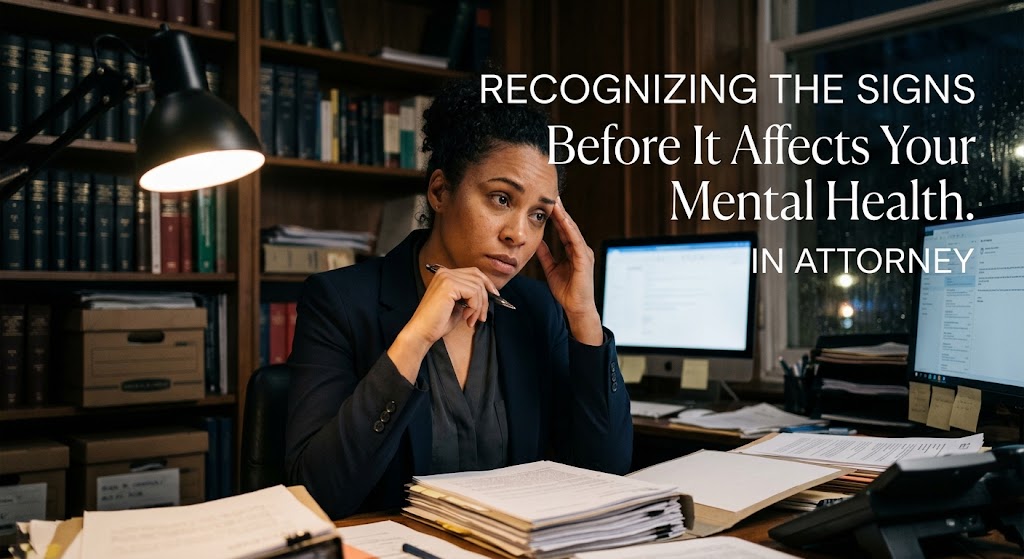
Attorney stress does not always end when the workday is over. A demanding case can remain on your mind during dinner, a difficult client can make it hard to relax at home, and an approaching deadline can keep you awake long after you leave the office. For attorneys who regularly work under pressure, this constant mental strain can gradually affect sleep, relationships, emotional wellbeing, and physical health. Learning to recognize the signs of chronic attorney stress early can help prevent it from developing into serious burnout, mental health concerns, or unhealthy reliance on alcohol and drugs.
Why Attorney Stress Can Be Difficult to Recognize
Stress is common in the legal profession. Attorneys often manage high stakes decisions, demanding schedules, difficult conversations, and significant responsibilities for their clients. Some also feel pressure to remain calm and confident regardless of what is happening behind the scenes.
That professional composure can make personal struggles difficult to identify.
An attorney may continue meeting deadlines, representing clients, and maintaining a successful career while privately feeling exhausted or overwhelmed. Because work performance has not yet declined, the person may assume there is no real problem.
However, mental health concerns do not always begin with an obvious crisis.
High Performance Can Hide Emotional Exhaustion
A person can be highly productive while experiencing chronic anxiety, depression, emotional exhaustion, or unhealthy coping patterns. In fact, staying constantly busy can sometimes make it easier to avoid difficult emotions.
You might notice that you are:
- Thinking about cases constantly, even at home
- Checking work messages late at night
- Becoming increasingly irritable with family or colleagues
- Having trouble falling asleep or staying asleep
- Feeling emotionally numb after a demanding day
- Losing interest in hobbies and social activities
- Using alcohol or other substances to relax
- Feeling unable to slow down
- Experiencing persistent worry about work
- Finding it difficult to enjoy time away from the office
One sign by itself does not necessarily indicate a mental health disorder. However, a pattern that continues or becomes more intense deserves attention.
When Work Stress Starts Affecting Your Personal Life
One of the clearest warning signs of excessive attorney stress is that work begins to occupy every part of your life.
You may technically be home, but mentally you are still in the courtroom, office, conference room, or preparing for the next client conversation. Over time, loved ones may notice that you are physically present but emotionally unavailable.
Relationships Can Become a Stress Indicator
Chronic stress can change how people communicate and respond to one another. Someone who normally has patience may become short-tempered. An attorney who once enjoyed family activities may begin avoiding them because there is always another task to complete.
These changes should not automatically be blamed on a busy schedule.
If work stress is consistently interfering with relationships, sleep, recreation, or your ability to feel present, it may be time to consider whether additional support would help.
The Connection Between Stress and Unhealthy Coping
Everyone develops ways to manage difficult emotions. Some strategies support recovery and wellbeing, while others can create additional problems.
For example, an attorney might have a drink after a stressful case because it seems like the fastest way to switch off. At first, this may appear manageable. However, if drinking becomes the primary way to relax, sleep, socialize, or escape difficult emotions, the pattern can become increasingly concerning.
The same principle can apply to prescription medications, recreational drugs, gambling, excessive work, or other compulsive behaviors.
Pay Attention to Why You Are Using Something
A useful question is not simply, “How much am I using?”
Also ask:
“What am I trying to feel, avoid, or change when I use it?”
Using alcohol or drugs to escape anxiety, emotional pain, exhaustion, or professional pressure can indicate that the underlying stress needs attention. The issue is not about judging yourself. It is about understanding what your coping strategy is doing for you and whether it is creating new risks.
Practical Ways to Manage Attorney Stress Before It Escalates
Recognizing stress is important, but awareness should be followed by action. Small changes can create meaningful opportunities for recovery and emotional balance.
Create a Real Transition Between Work and Home
If possible, develop a consistent routine that signals the end of the workday. A short walk, exercise session, shower, change of clothes, or several minutes of quiet reflection can help create psychological distance from professional responsibilities.
Protect Your Sleep
Constantly reviewing cases in your head at night can make quality sleep difficult. Establishing a predictable bedtime routine and reducing work-related screen time before bed may help your mind slow down.
Persistent sleep problems, however, should not simply be accepted as part of being an attorney. Discuss ongoing concerns with a qualified healthcare or mental health professional.
Make Time for Activities That Are Not About Achievement
Attorneys are often accustomed to measuring progress through results. Recovery requires a different perspective.
Spend time doing something because you enjoy it, not because it advances your career. Exercise, music, creative activities, time outdoors, family activities, and meaningful social connections can all provide healthier outlets for stress.
Talk to Someone Before You Reach a Crisis
You do not need to wait until substance use becomes severe or your mental health deteriorates before seeking professional assistance.
Counseling and mental health treatment can help you understand what is contributing to your stress and develop practical strategies for managing it. Early intervention can also make it easier to identify unhealthy coping patterns before they become deeply established.
When Professional Addiction or Mental Health Treatment Is Needed
Sometimes stress becomes more than something that can be addressed through lifestyle adjustments. If alcohol or drug use has become difficult to control, or if anxiety, depression, trauma, or emotional exhaustion is significantly affecting daily life, professional treatment may be appropriate.
Treatment should be based on the person’s needs rather than a one size fits all formula.
Inpatient and Outpatient Care
Inpatient treatment can provide a structured environment for people who need intensive support and distance from the pressures contributing to their substance use or mental health concerns.
Outpatient treatment can provide professional counseling and recovery services while allowing appropriate individuals to continue managing work, family, and other responsibilities.
The right level of care depends on factors such as the severity of the problem, safety concerns, substance use patterns, mental health needs, support system, and recovery goals.
Holistic and Faith Based Support
Recovery involves more than eliminating a substance or reducing a symptom. Sustainable healing can involve emotional, physical, social, and spiritual wellbeing.
For some people, holistic approaches provide useful tools for restoring balance and developing healthier routines. For individuals who draw strength from faith, faith based care can also be an important part of the recovery process.
The most effective approach is one that respects the individual’s values, circumstances, needs, and goals.
Taking Attorney Stress Seriously Is a Sign of Strength
Attorneys spend their careers identifying problems, assessing risks, and helping other people through difficult circumstances. Applying those same principles to personal wellbeing can be challenging, especially when professional expectations encourage you to keep performing regardless of how you feel.
But persistent stress should not be dismissed simply because you are still functioning.
If attorney stress is following you home, affecting your relationships, interfering with sleep, changing your mood, or increasing your reliance on alcohol or drugs, take those signs seriously. They are opportunities to pause and address the underlying problem before it becomes more difficult to manage.
Professional addiction recovery and mental health treatment can provide the guidance and structure needed to develop healthier coping skills and restore balance. Whether individualized outpatient care or a more structured inpatient setting is appropriate, asking for help can be an important step toward protecting both your wellbeing and your future.
Your career matters, but so does the person behind the professional role. Reaching out for support today can help you build a healthier way to handle pressure without allowing attorney stress to take over the rest of your life.